
Ilford Delta 3200 Review: Testing It Beyond Low Light
The final nail in the coffin of my Leica 50mm Elmar-M
Ilford Delta 3200 is a high-speed 35mm film designed for low-light photography, often used for night shooting and indoor work. But rather than using it in the conditions it’s known for, I wanted to see what happens when you use Delta 3200 differently, in daylight, for landscapes, and outside its intended purpose. I loaded Ilford Delta 3200 because I was trying to prove something to myself about a lens.
My 50mm Elmar-M is exactly the sort of lens I’m supposed to love. Compact. Mechanical. Classic. Mounted on the Leica M6, it looks and feels great to use but something hasn’t felt right
The negatives have been building and after a winter of shooting, I think the love story is over.
At f/2.8 and f/4, the corners are softer than I’m comfortable with. Not in a charming, vintage way. Just soft enough to weaken the frame when composition relies on edge detail. At f/8, though, the lens does sharpens up and for my purposes becomes more useable.
The problem is getting there consistently on film and even harder task when 2026 so far has been constant rain and gloom.
Using film speed to fix a lens
Delta 3200 gave me a workaround.
By shooting a high-speed film, I could comfortably keep the lens at f/8+ without dragging shutter speeds too low. Technically, it works but there are some pretty big compromises, which is grain.
But the solution revealed the real issue.
If I have to choose high speed film just to keep a lens in its safe aperture range, then the lens isn’t working for me in the way it should, I don’t plan on having multiple lenses at the same focal length for different situations.
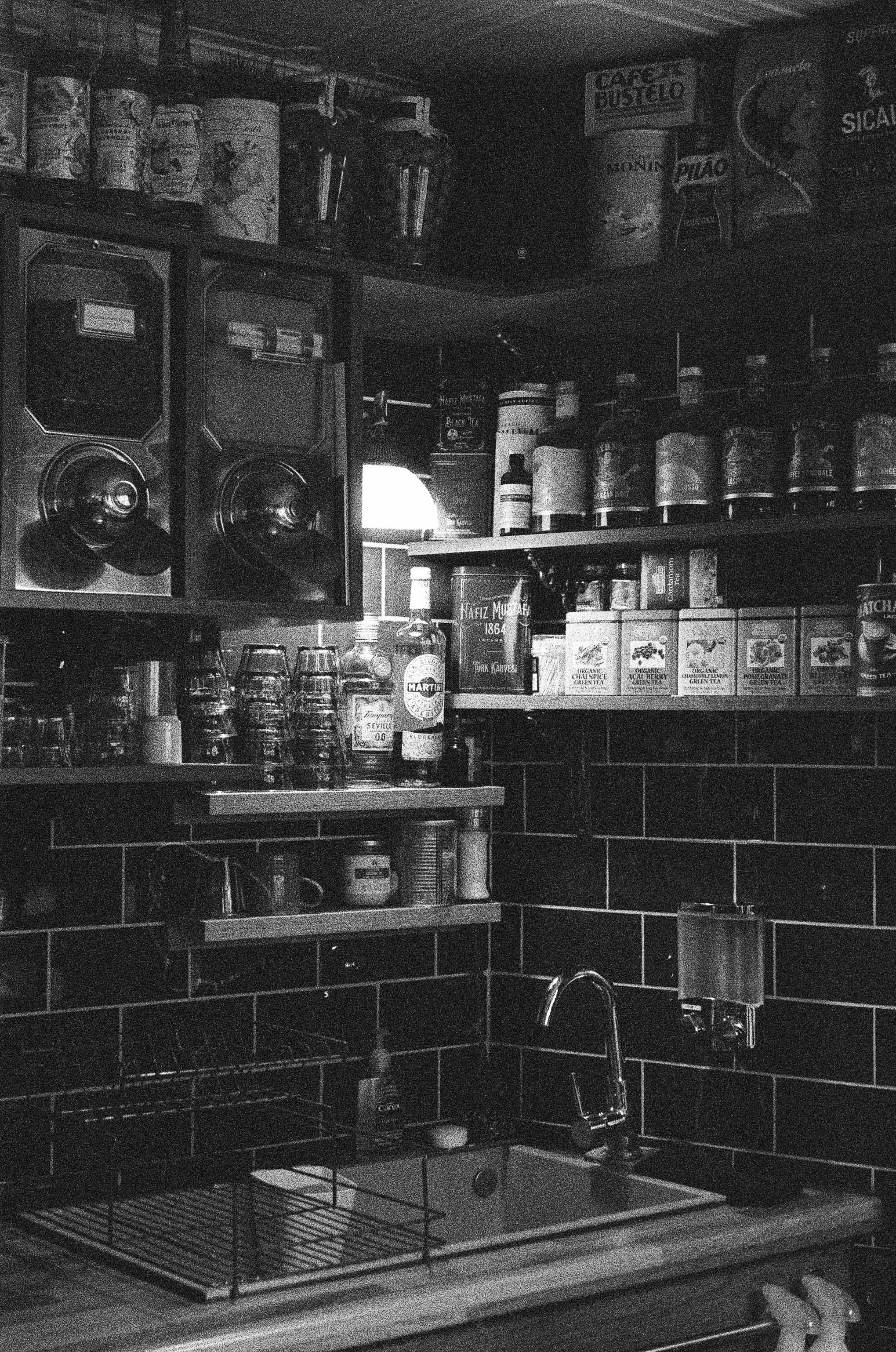
Delta 3200 has presence, its grain is obvious and contrast builds quickly. The images on this stock can become as much about the stock as what you’re taking photos of. That can be beautiful in the right setting, winter cities, interiors, low light. But I don’t want this to be a technical crutch of using the lens, I want to shoot ISO 100/200 film for landscapes, but I don’t want to be stuck to the middle of a sunny day to get the results I need and then equally be stuck if I then step inside.
Digital would hide this problem
If I were using the Elmar on a modern mirrorless body, I suspect this wouldn’t bother me nearly as much. High ISO performance would be clean. I could lift shadows without penalty. Corner softness would be easier to correct or simply less noticeable in a high-resolution file viewed at normal sizes.
Digital forgives, Film doesn’t.
On film, the weaknesses are baked in. Grain isn’t optional. Exposure latitude isn’t generous in the same way. I’m commited to the combination of lens and stock the moment I press the shutter. And that commitment has clarified something.
This isn’t about character
It would be easy to reframe the Elmar’s behaviour as “character”. Plenty of older lenses get that defence.
But I want to get the most out of my film photography and at the moment the little Elmar-m is holding me back, in that I'm “binning” more film photos with this lens that I think I would be with modern optics.
I don’t want to build a workflow around keeping a lens away from its weaker apertures. I don’t want to select film stocks based on compensating for corner performance. And I don’t want to second-guess compositions because I know the edges might not hold up.
Delta 3200 didn’t save the lens but It has confirmed its time to move on
Moving forward
If I’m committing to film then I want the lens to be the strongest, most reliable part of the equation. Optical design has come a long way in 30 years and Its time to take advantage of that. Improved coatings. Better edge-to-edge sharpness. More consistent performance across the aperture range.
The Elmar-M is a lovely object. it feels great on the Leica, balances well, is compact and easier to travel with, but feeling right and performing right aren’t always the same thing.
Delta 3200 was supposed to be a practical experiment, Instead, it became the final nail in the coffin.
