
Cinestill 800T Review: Night Photography and Low-Light Film Magic
Introduction
Cinestill 800T is a 35mm film designed specifically for night photography and low-light shooting, known for its cinematic colours and distinctive halation around bright light sources. Originally based on motion picture film, it’s become a popular choice for photographers looking to capture moody street scenes, neon lights, and atmospheric landscapes without relying on digital editing. In this review, I’ve been shooting Cinestill 800T in real-world conditions to see how it actually performs — and whether it lives up to the hype.
Why Cinestill 800T is Unique
Unlike traditional daylight-balanced films, Cinestill 800T is tungsten-balanced. That means it’s designed to work in artificial light conditions, like street lamps, neon signs, or interior lighting. It’s ISO 800, fast enough to shoot handheld in low light, but also forgiving enough to push in challenging conditions.
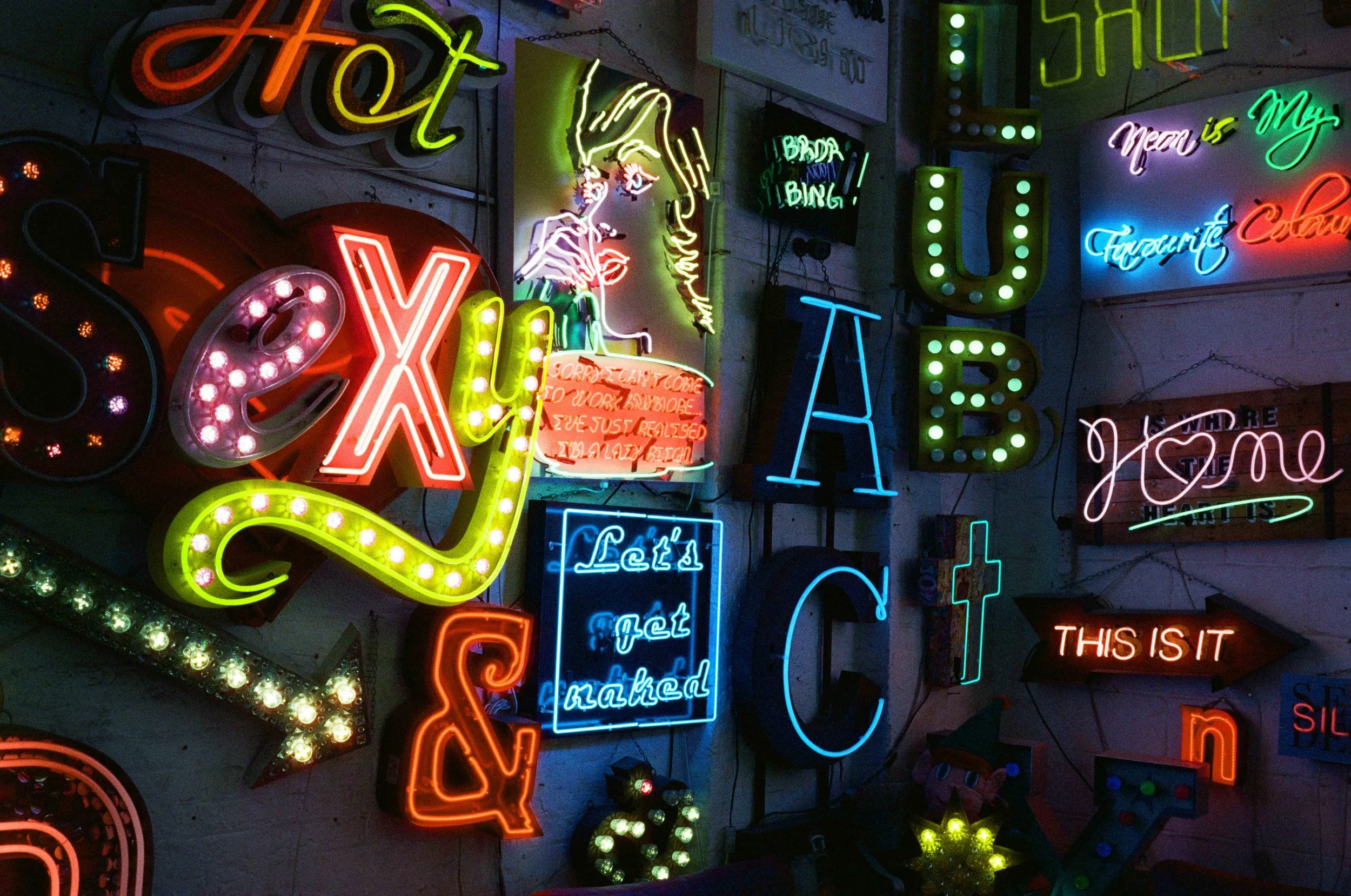
Neon Lights in Walthamstow
Key Features:
ISO 800 for low-light shooting
Tungsten-balanced for rich colour under artificial lights
Cinematic look without heavy editing
Tip: Use a tripod if you want extremely sharp night landscapes, but this film also shines handheld thanks to its high ISO.
Shooting Cinestill 800T
I’d heard a lot about Cinestill and Portra before I started shooting film but after finally running a decent number of rolls through my camera I can see why people like it. The film’s characteristic halation around highlights creates a dreamy glow, especially around neon signs. On overcast evenings or dark streets, the orange-red tones of street lighting are enhanced, giving an almost cinematic feel straight from the camera.
Camera settings tips for best results:
Use a fast lens (f/1.8–f/2.8) to make the most of low-light ISO 800, for street photography I like higher ISO film to keep the aperture as high as possible
Push-pull carefully, this film can handle +1 stop without harsh noise
Avoid overly harsh direct light, which can blow out highlights, This film doesn’t render greens as well as other films because of the tungsten balance.
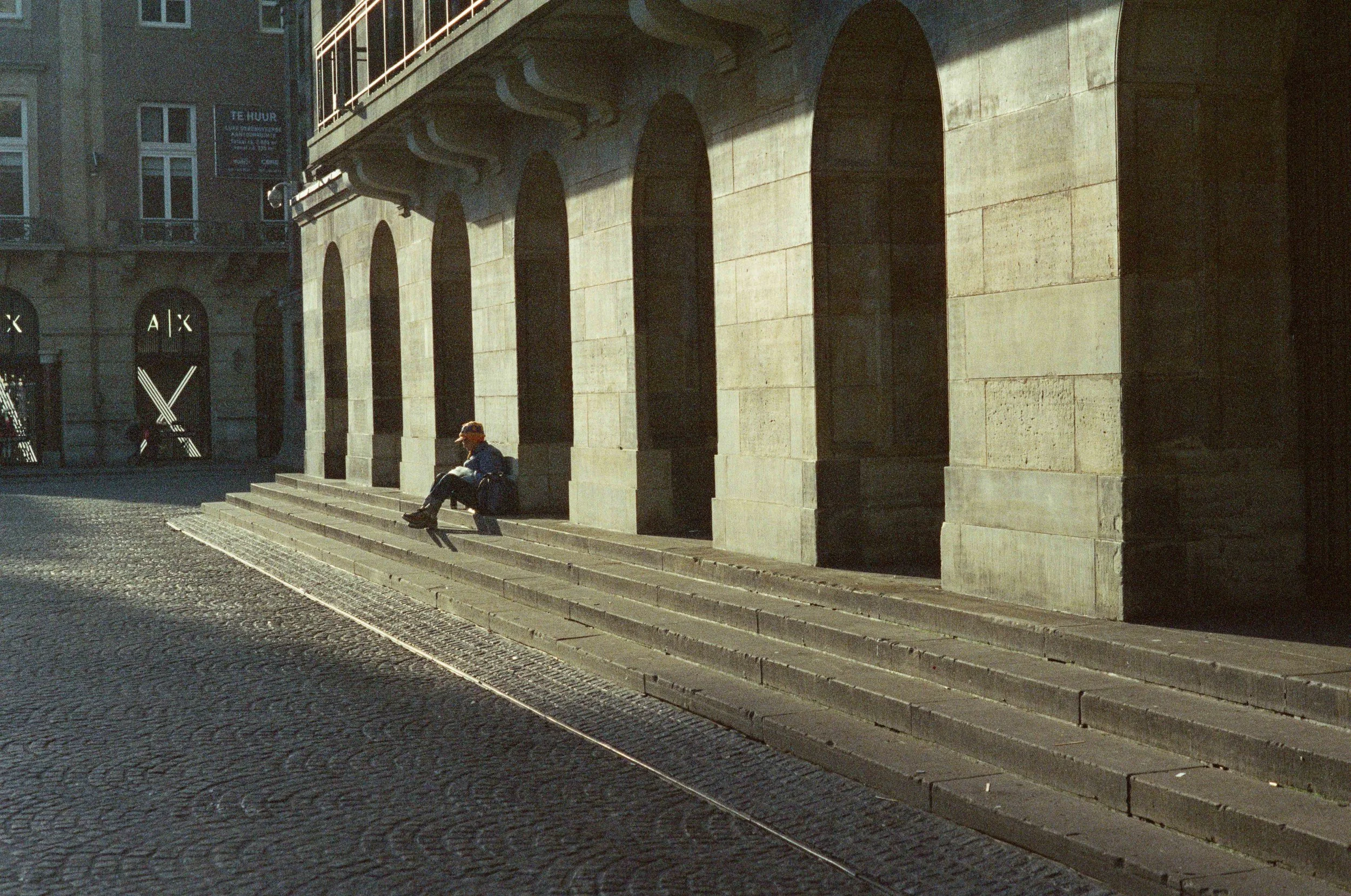
Waiting in Amsterdam
Processing and Scanning
Cinestill 800T can be developed as standard C-41 film ( I get my film developed here). As with all the 35mm film I shoot, I keep post-processing minimal once I get my shots back I do not make any changes in photoshop/lightroom as the film gives a ready-made cinematic look.
Scanned colours: soft skin tones, glowing highlights
Grain: noticeable, yet pleasant for night urban shots
Post-processing: subtle curves and contrast, minimal colour correction
Pro tip: The unique glow around highlights is part of the film’s charm. Don’t over-edit this effect away.
When to Use Cinestill 800T
Night/ street photography: neon lights, cafes, urban alleys
Low-light interiors: moody cafés or restaurants
Foggy landscapes: atmospheric cityscapes or hills at dusk
It’s less ideal for bright daylight landscapes, the tungsten balance can make colours feel cool or unnatural in the sun.
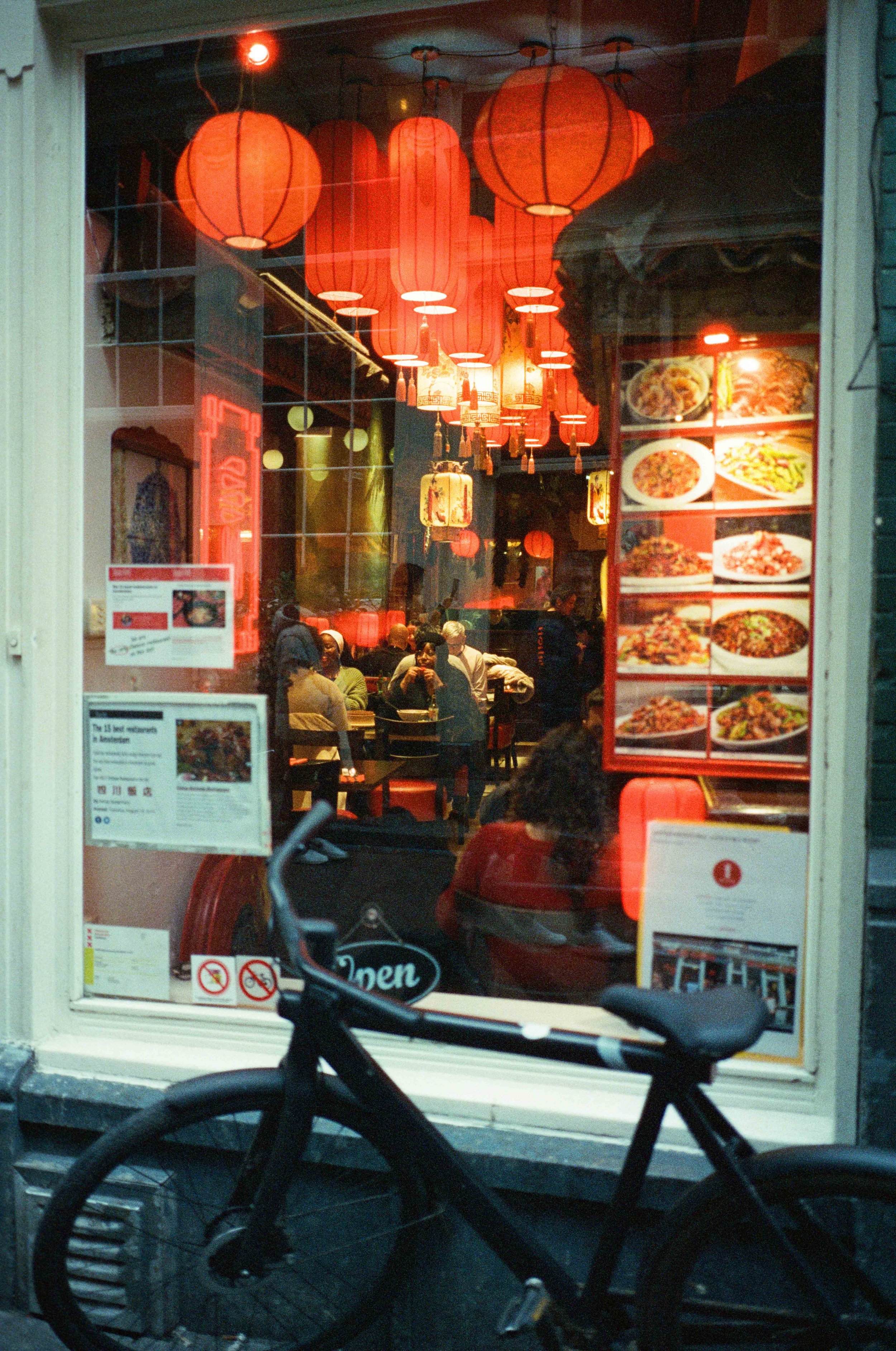
Restaurant window in Amsterdam
Pros and Cons
Pros:
Beautiful cinematic tones
Handles low-light situations exceptionally
Fast ISO 800
Excellent halation effects
Cons:
Tungsten balance can create cool tones in daylight
Slightly grainy at higher ISO or pushed exposures
Not the cheapest film to shoot
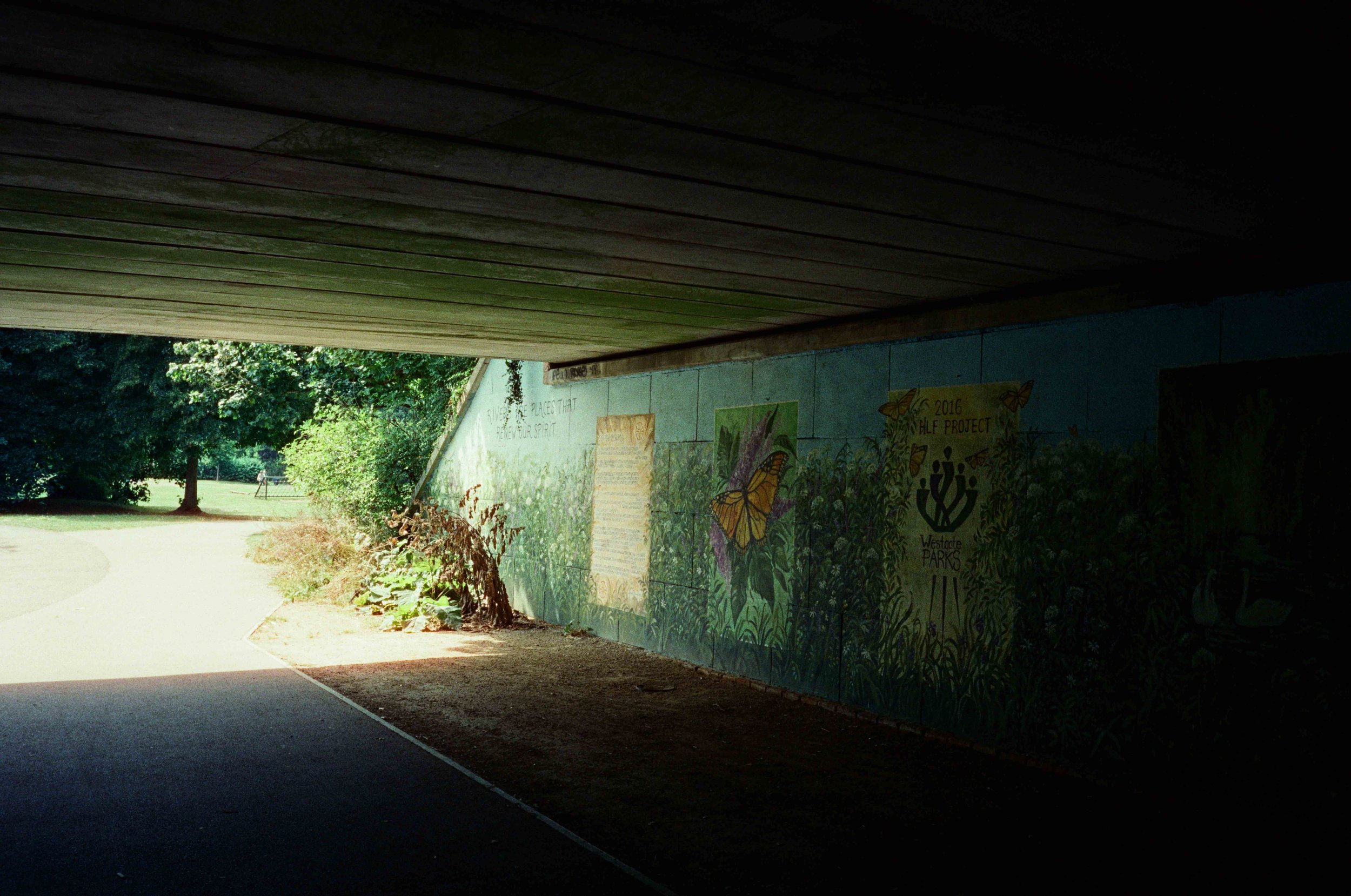
Underpass in Canterbury, you can see the greens in the back of the photograph here are very cool.
Final Thoughts
If you love night photography, cinematic cityscapes, or moody 35mm film experimentation, Cinestill 800T is worth trying. Its glow, halation, and low-light versatility make it one of the few films that can stand out without heavy editing.
On my own shoots, Cinestill 800T has become my go-to for night landscapes and urban exploration, I’ve shot this in Amsterdam for the weekend and its a great film stock for cold and dark UK winters.
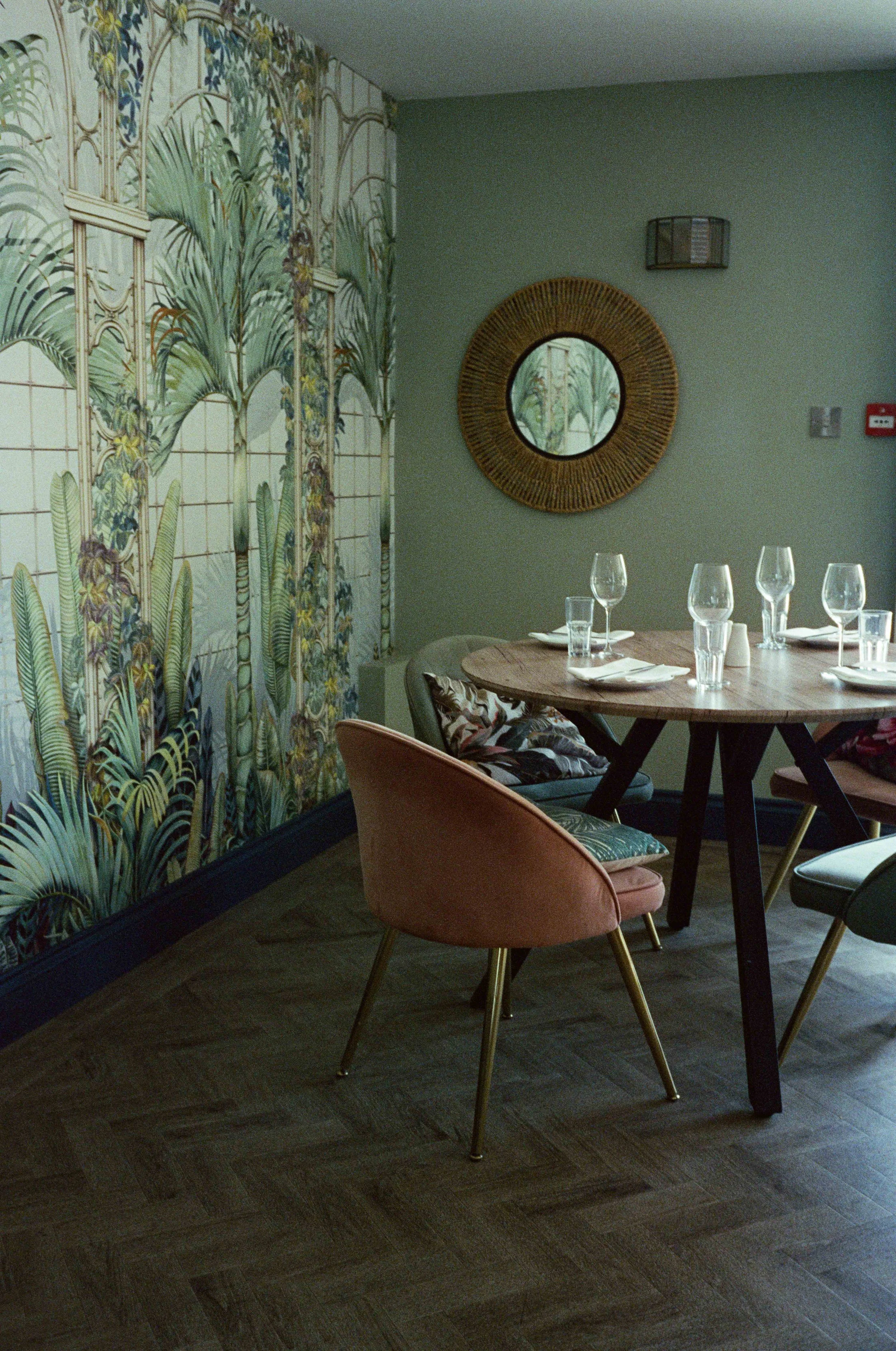
Empty Dinner Table
Looking for a good landscape photography film stock checking out this blog post - https://www.badphotography.co.uk/blog/portra-400-vs-portra-800-35mm-review
Want higher ISO and more noise read this post - https://www.badphotography.co.uk/blog/testing-delta-3200-but-not-for-the-film
Check out the camera I am using for film here - https://www.badphotography.co.uk/blog/a-year-with-the-leica-m6-still-learning-still-in-love
